Vallvidrera · Garcés · De Seta · Bonet, 2013
The studio
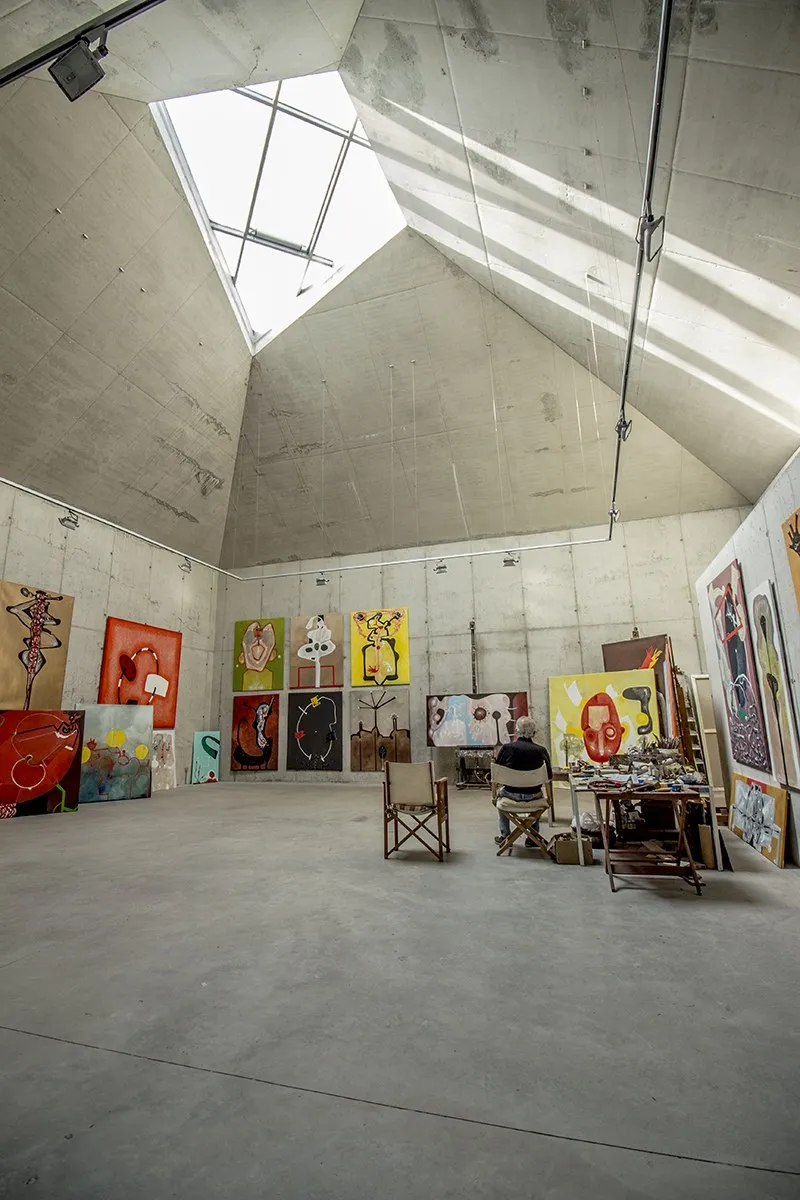
A room twelve metres by thirteen and a half, without a single window, lit by one opening cut where the four sloping planes of the roof meet. Eduard Arranz-Bravo’s late work was made beneath it, under this light and no other.
The building
- Place
- Vallvidrera, on the slope of Tibidabo
- Architects
- Garcés · De Seta · Bonet Arquitectes
- Completed
- 2013
- Levels
- Two. Painting above, sculpture and storage below
- Painting room
- 12 × 13,5 m
- Light
- From above, through a single skylight
Two buildings, not one
In the same place in Vallvidrera there are two things that must not be confused. The house-studio, where he lived and worked from 1991. And this free-standing building, completed in 2013, which is the one in these photographs. They are two properties on the same site and two different ways of working.
You reach it by a stone path, between holm oaks and pines. The building does not announce itself: it is a compact volume with a folded roof, and the fold is the first thing you see of it.
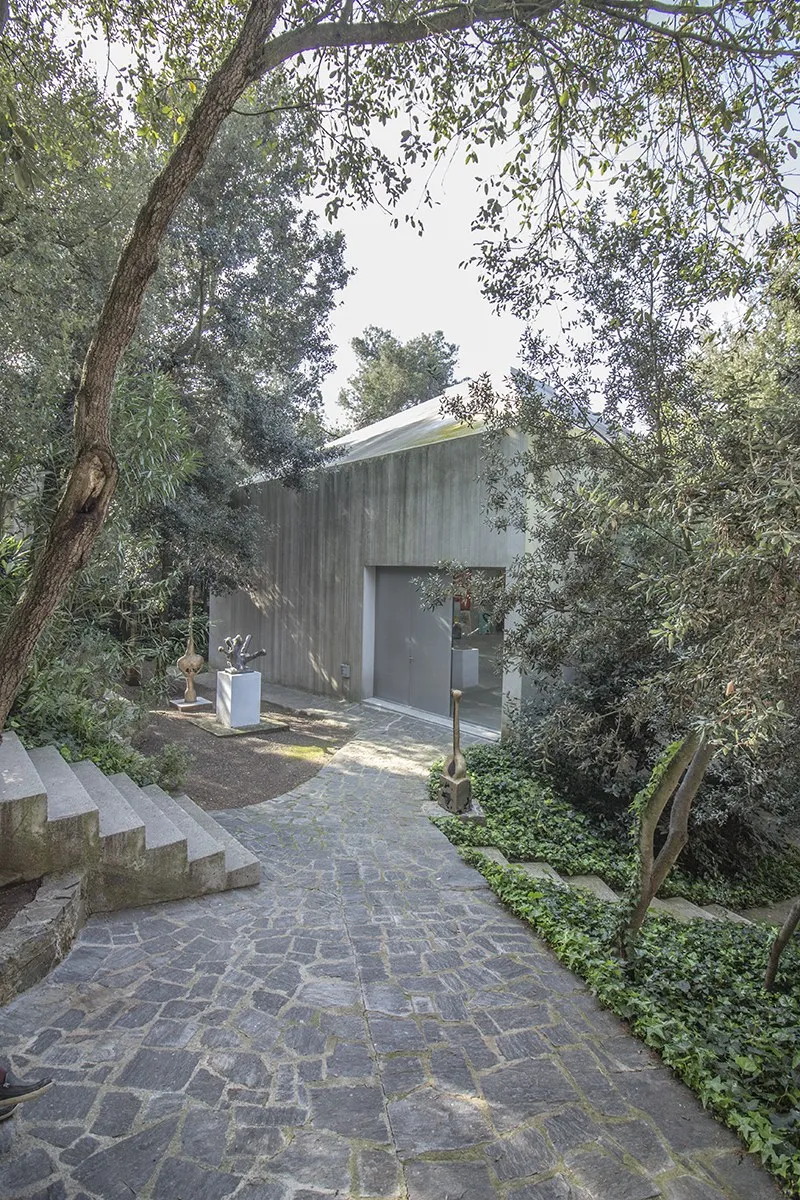
Arriving at the studio. The folded roof is seen from outside before it is seen from within.
The painting room
Upstairs there is not a single window. All four walls are exposed concrete from floor to ceiling, and the only opening is overhead. The architects call them espacios severos y desnudos al servicio del trabajo artístico
, and explain this as an answer to a solitary, introspective practice.
What comes of it is a light with no direction and no time of day: it falls from above, the same everywhere, and there is nothing to look at that is not the painting.
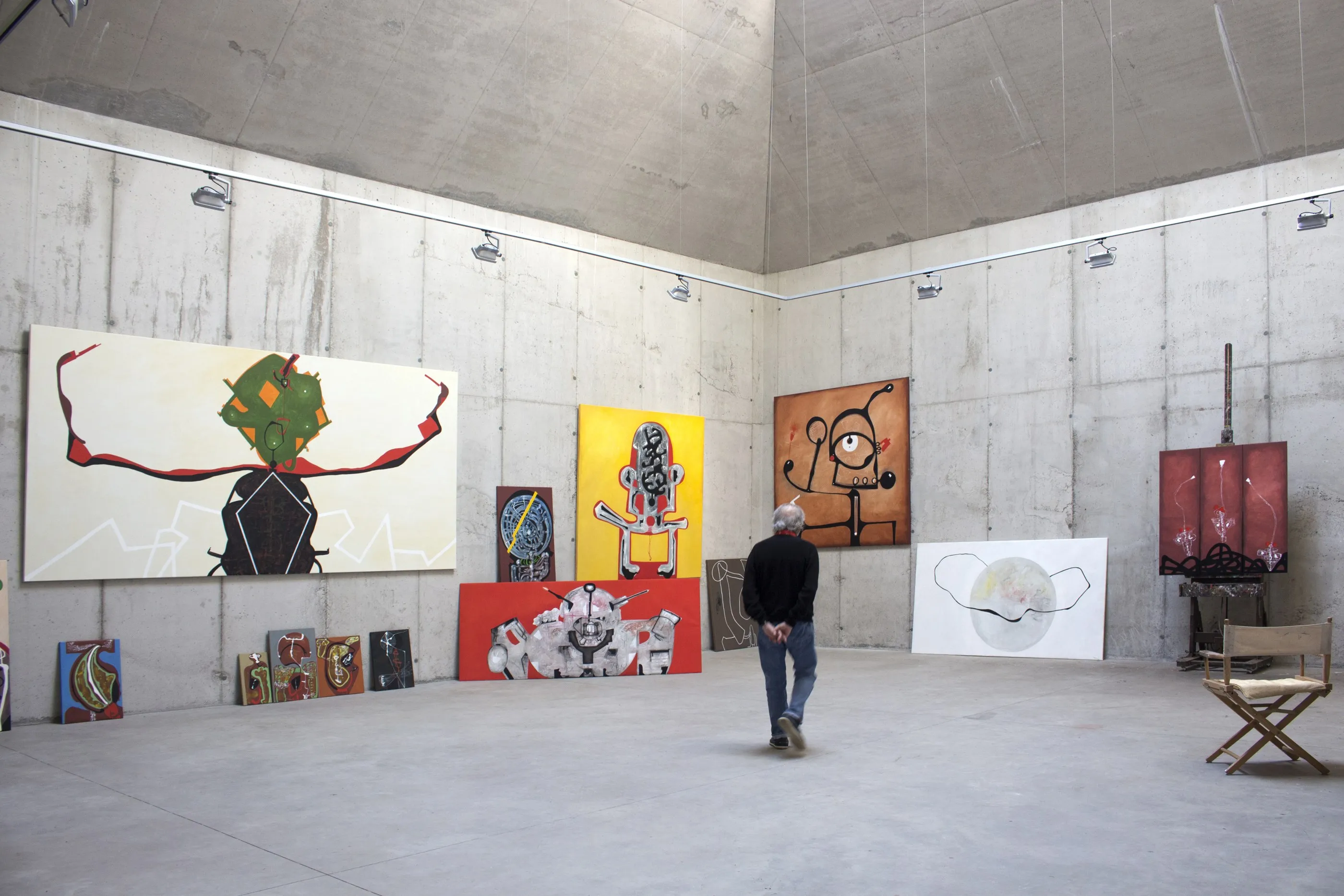
The painting room, 12 × 13.5 metres. The light comes only from the ceiling.
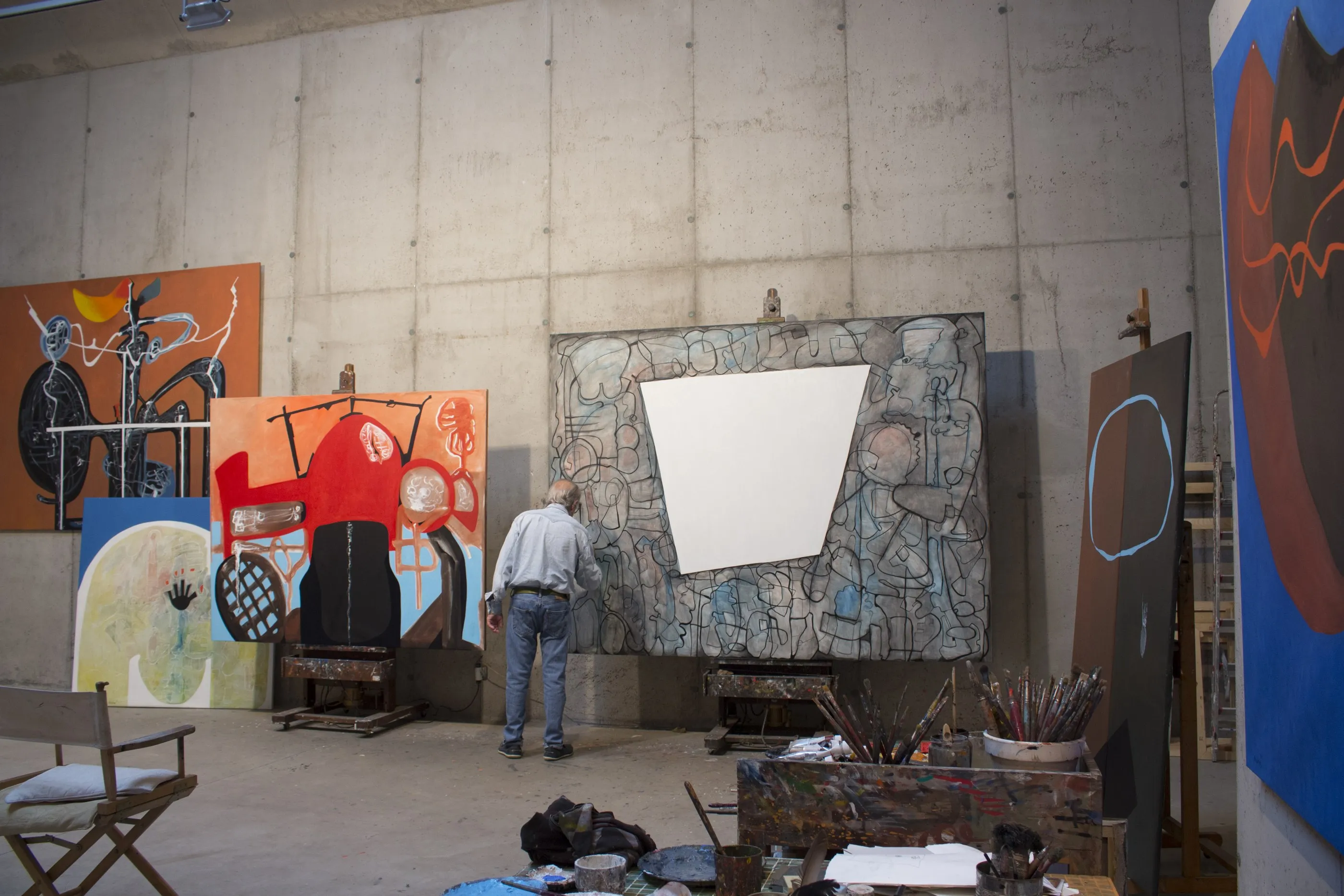
At the centre of the canvas, a white quadrilateral still unpainted.
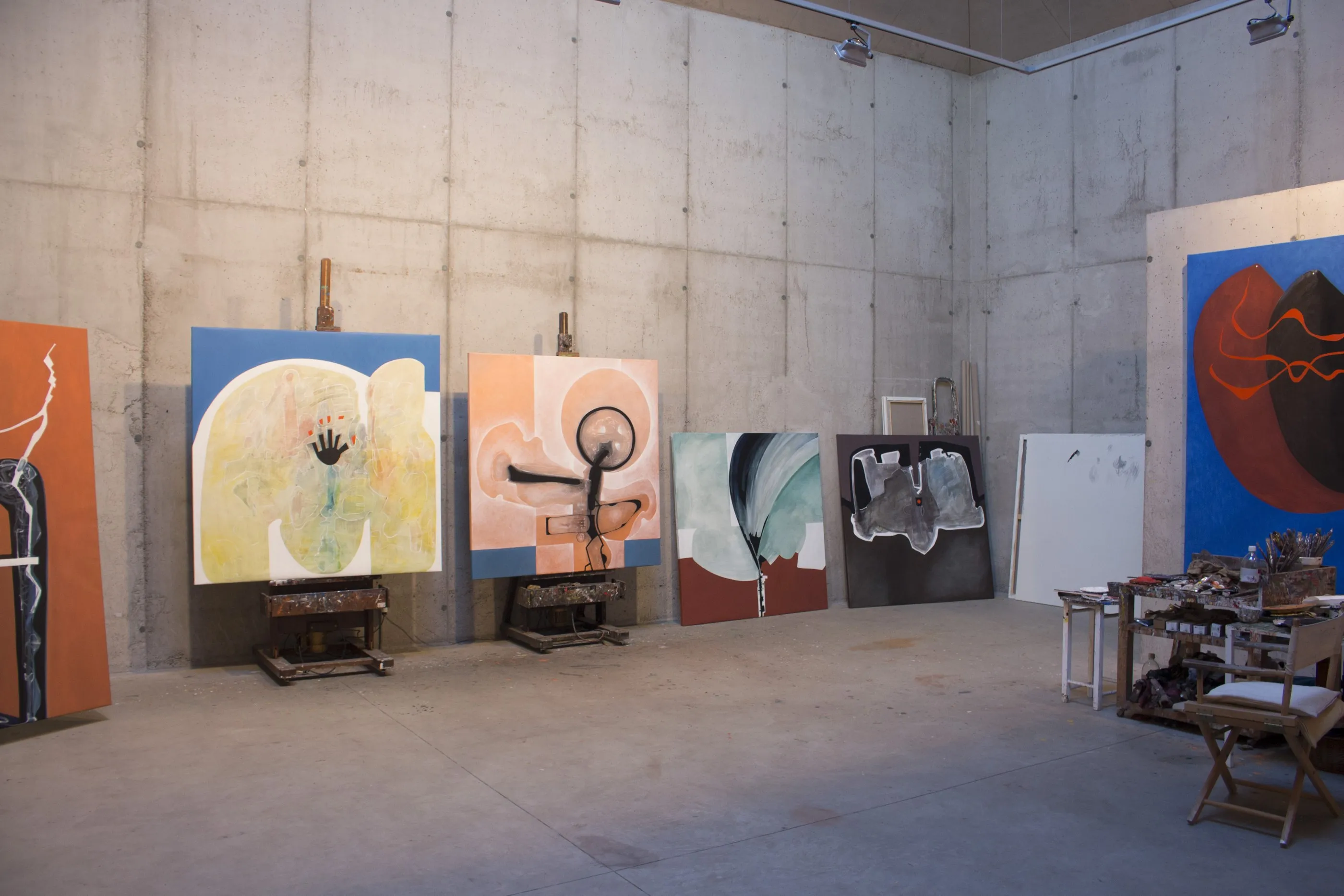
The two wooden easels, against the concrete.
The architects wrote «severe and bare», and so it is. What the family put inside, on the other hand, is a bentwood rocking chair and a canvas folding chair. The room is severe; what happens in it is not.
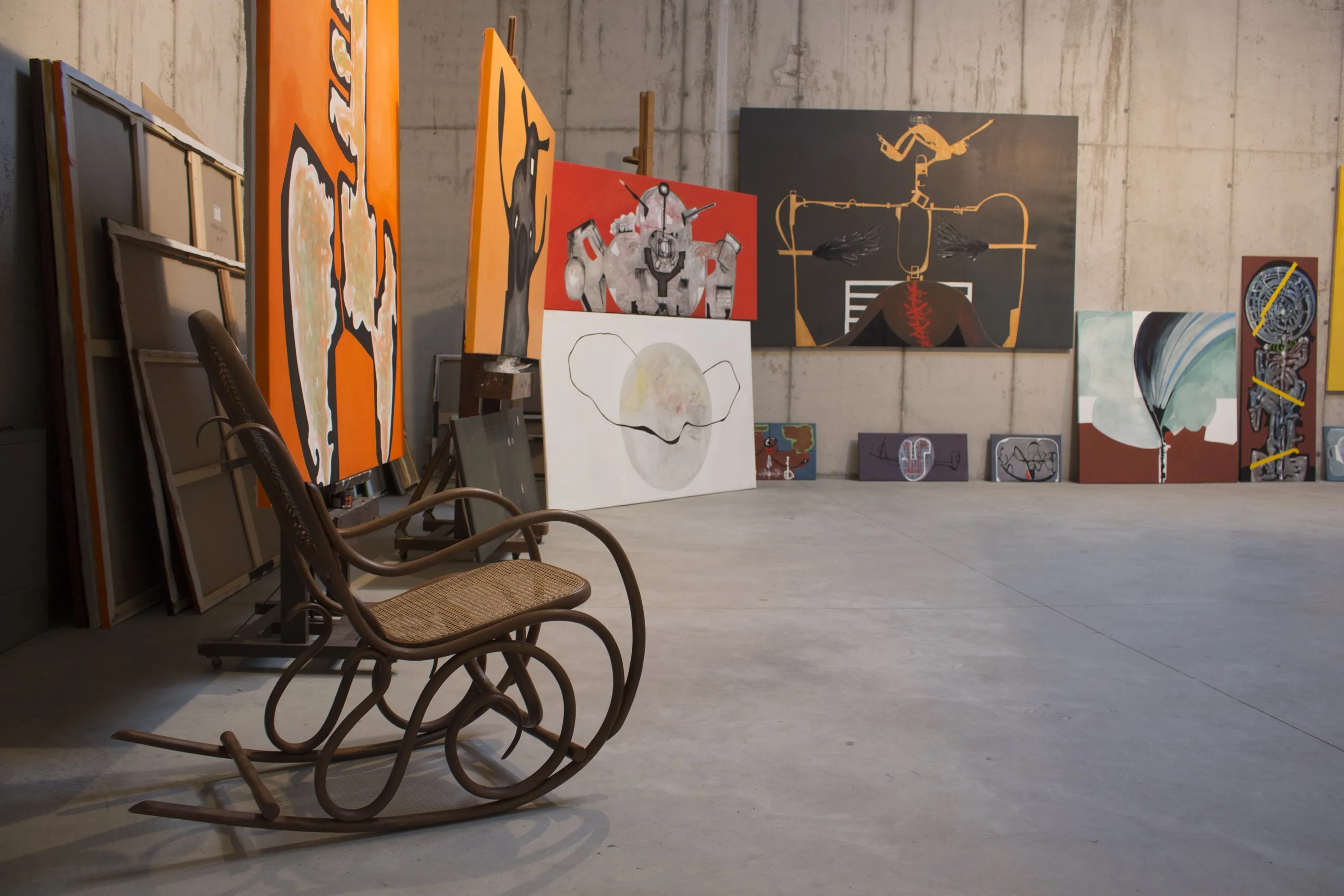
A bentwood rocking chair in the middle of a concrete room.
The skylight
The four planes of the roof rise and meet. Where they meet, they open: an irregular glass quadrilateral that is the only way light enters the whole room.
The Espai Arranz-Bravo logo takes the shape of the skylight. It is not a figure chosen for how it looks: it is that opening, drawn just as it is. When it appears large, something must be visible through it, because it is an opening and not a label.
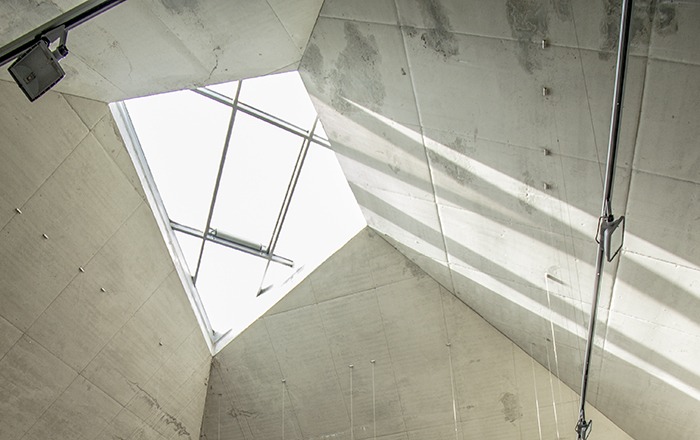
The mark, large, with the skylight showing through.
The sculpture workshop
Downstairs the building does exactly the opposite. A full glass wall facing the woods, at eye level, and work tables of wood and iron with work half made. The same architects who sealed the painting room were looking here for relaciones de carácter familiar
with the natural surroundings.
The same building gives each craft the light it needs: for painting, an opening in the ceiling and no distraction; for sculpture, the woods on the other side of the glass.
On that glass there is a red line painted by hand that runs across every pane from end to end. Nobody asked it to stop at the wall.
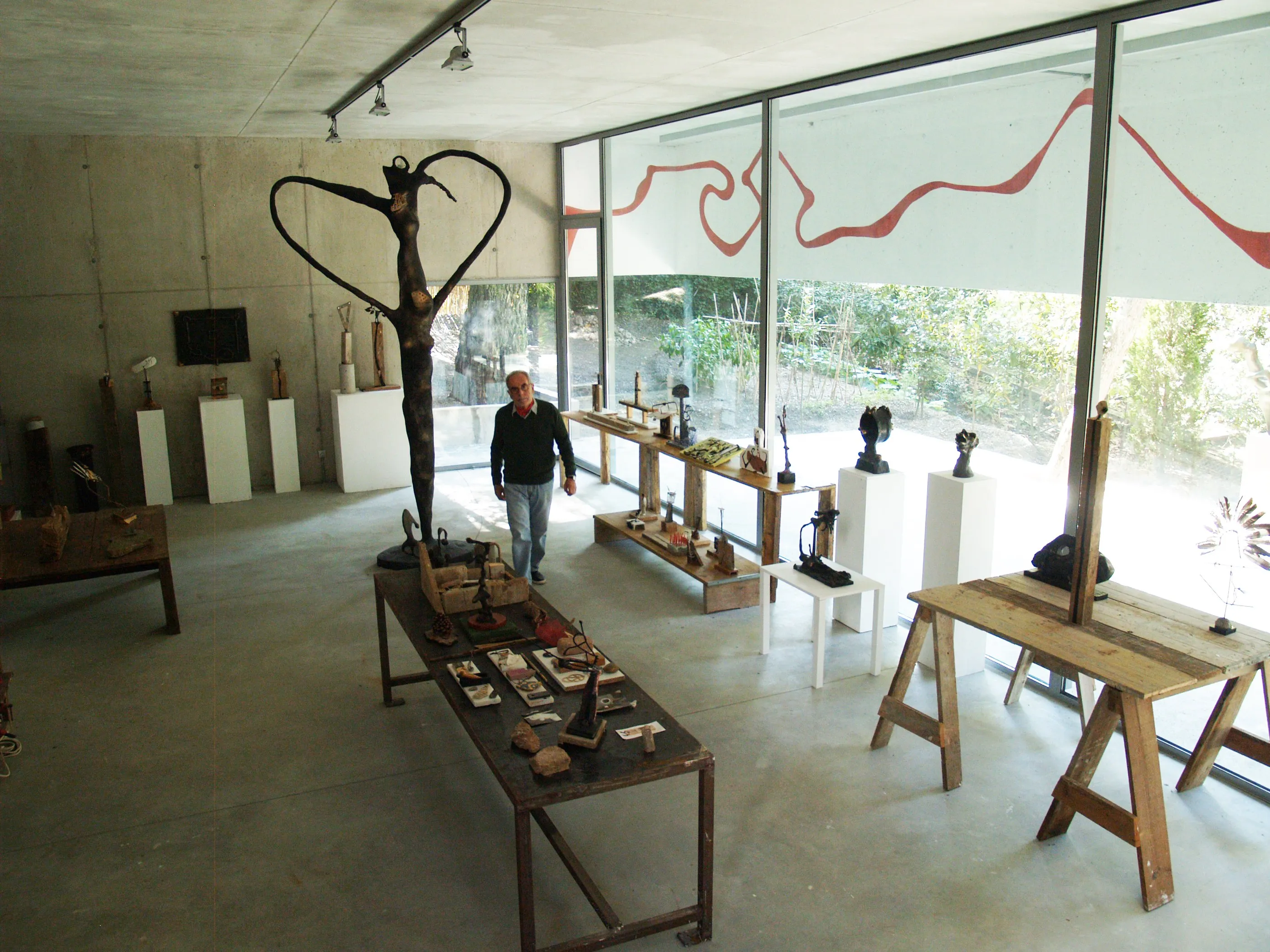
The red line, painted across the glass that faces the woods.
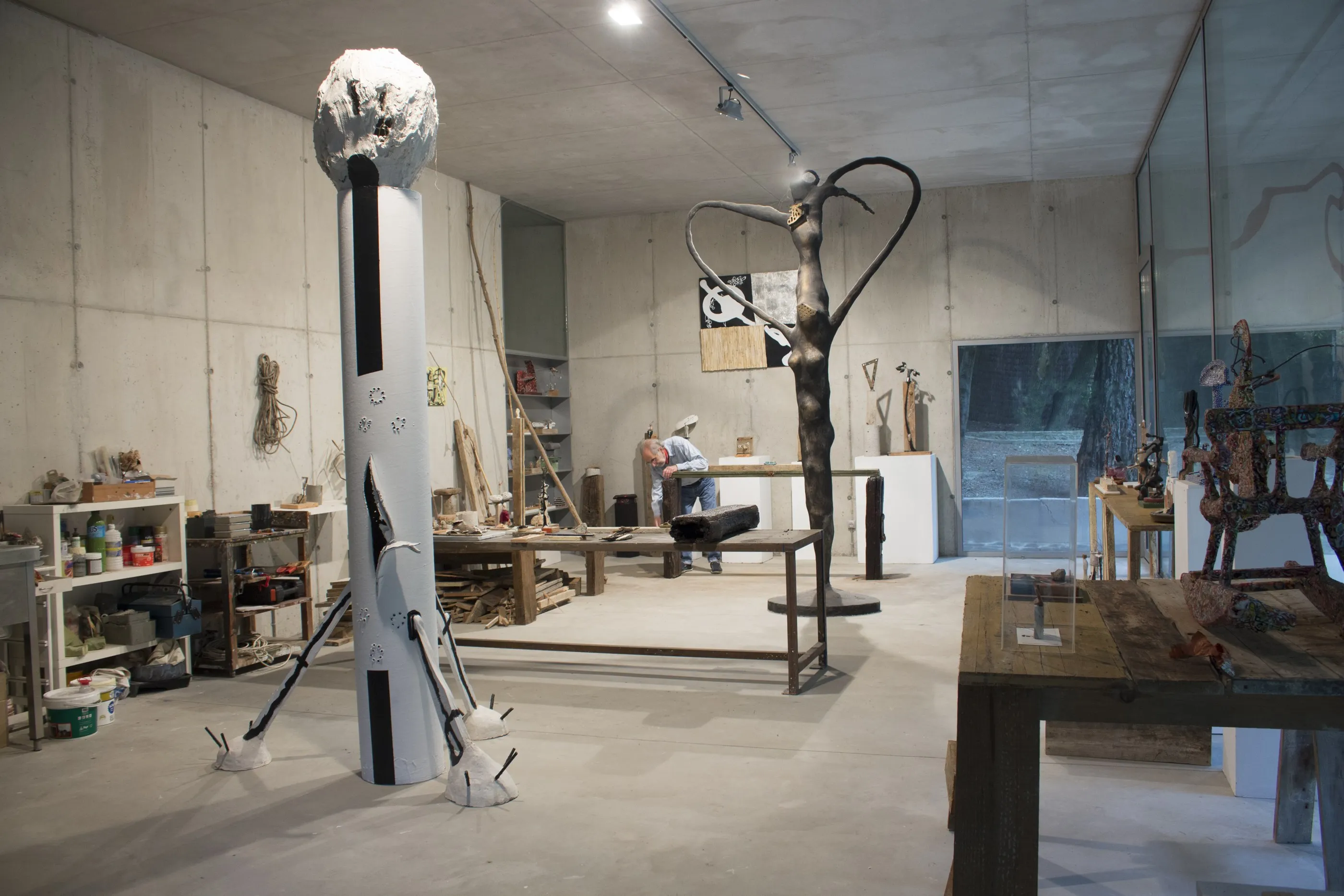
Downstairs the work is done by hand, with the woods in view.
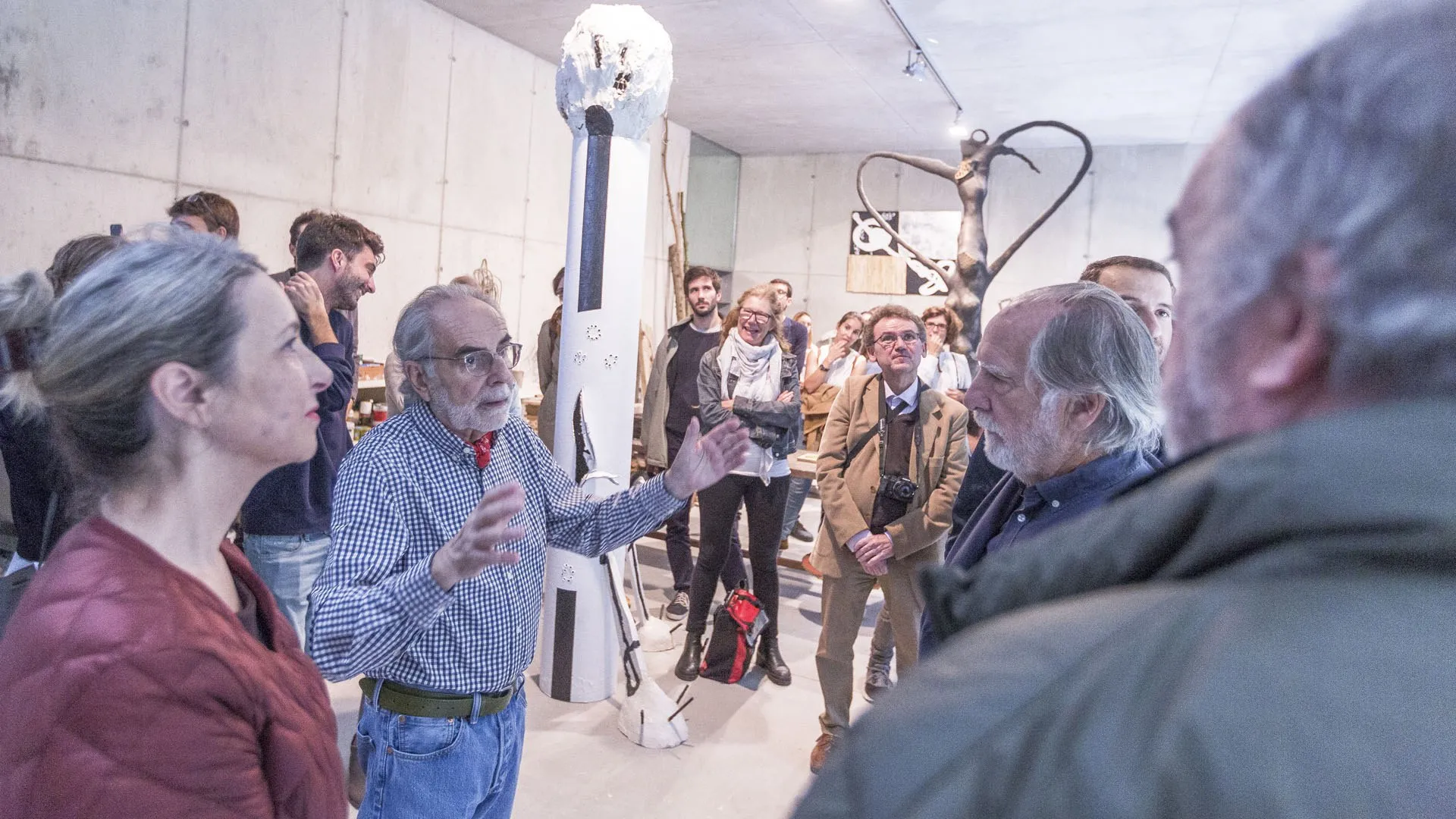
Open day at the studio, October 2017.
Photograph: Antonio Navarro Wijkmark
The woods
The work does not stop at the door. There is sculpture on the threshold, on the concrete slab, and more of it down the slope, among the pines and holm oaks, spread across the dry-stone terraces of the garden.
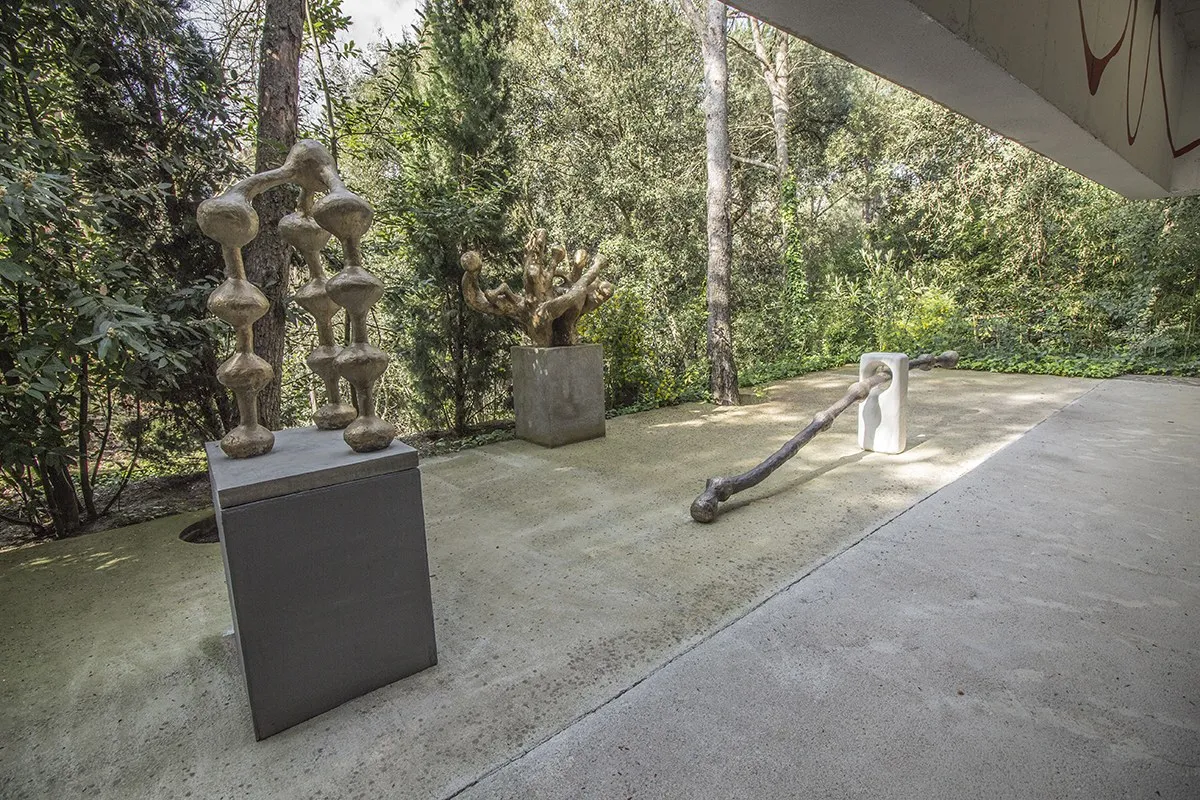
Sculptures on the threshold, on the concrete slab.
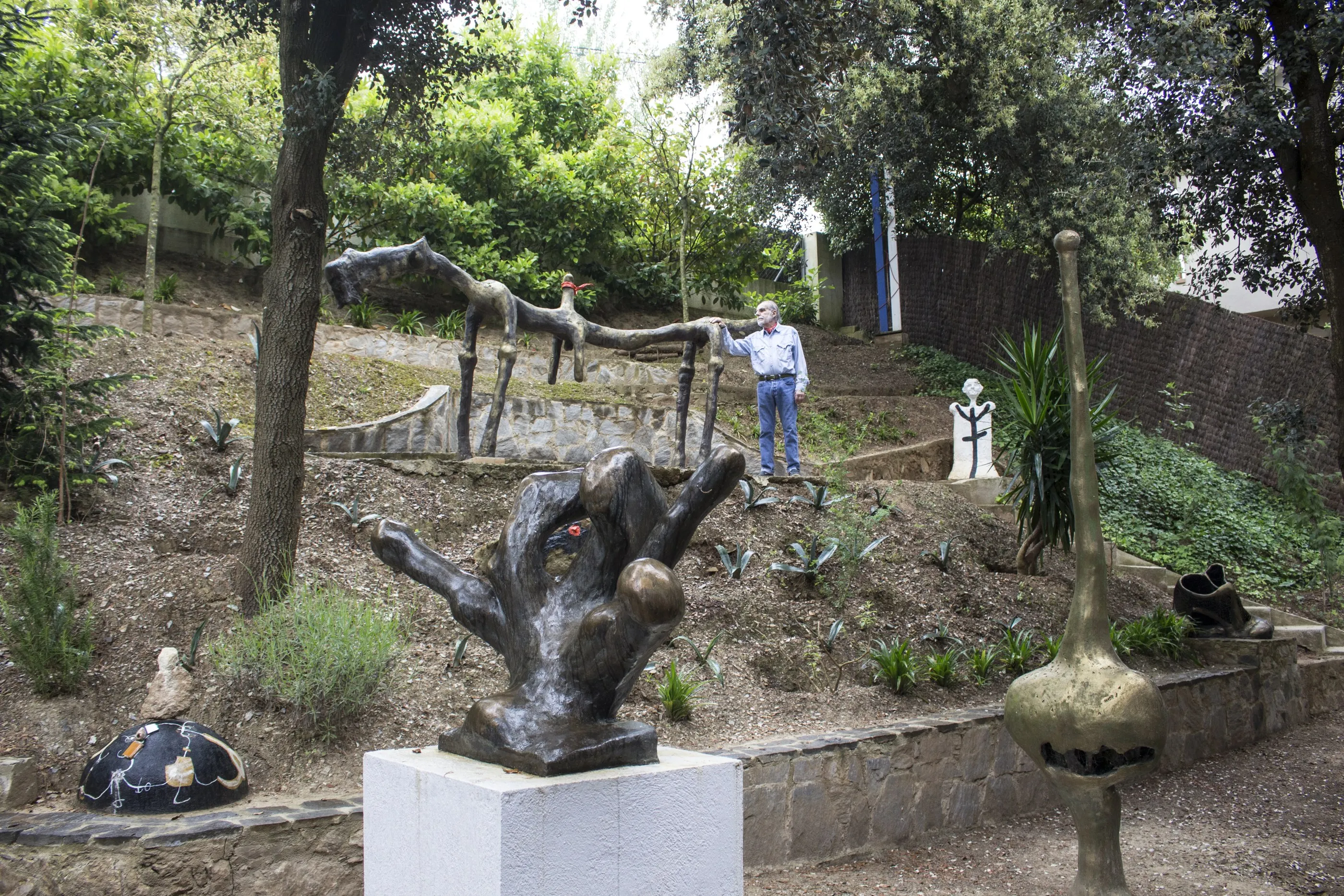
The garden terraces.
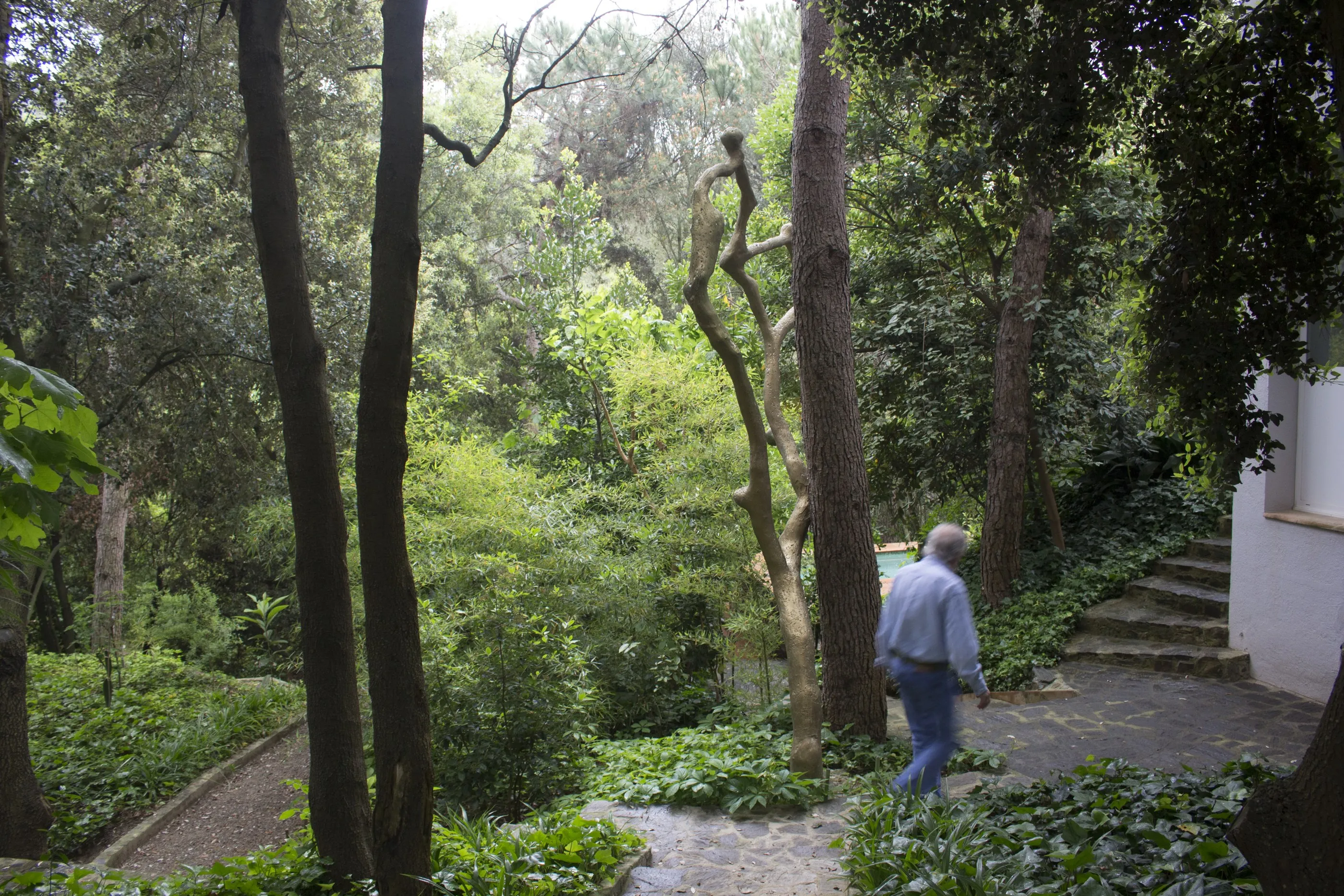
A bronze sculpture raised among the garden pines.
The studio as a working space
The studio is still a place of work: this is where the œuvre is documented, studied and classified. Turning stretchers round, reading what is written on the back, laying the small work out on the floor to compare it, deciding.
On the back of every canvas there are handwritten inscriptions with the title and the year. Much of what is now a documented catalogue entry began as one of those lines written on a wooden bar.
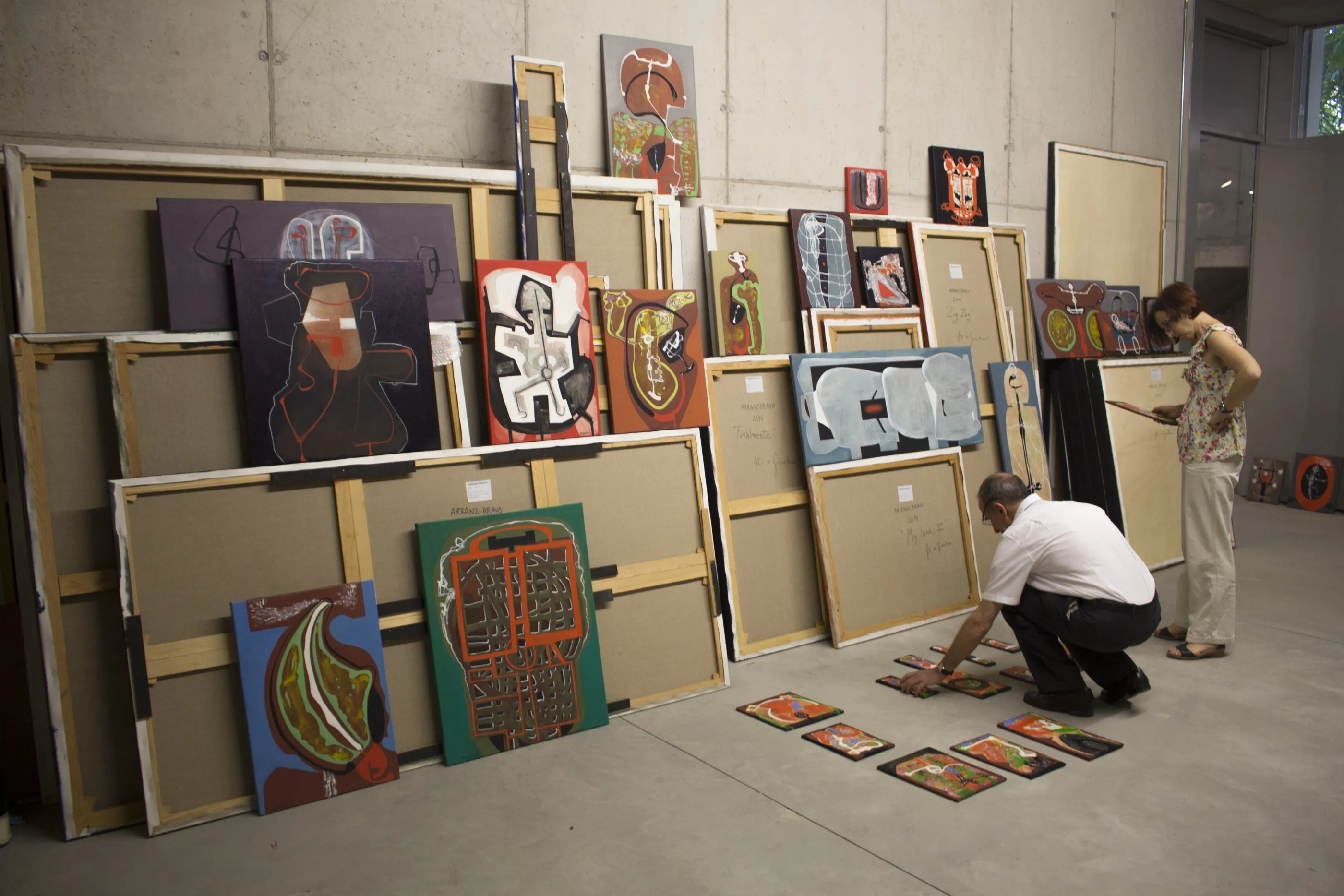
The stretchers, with the title and year written on the back.
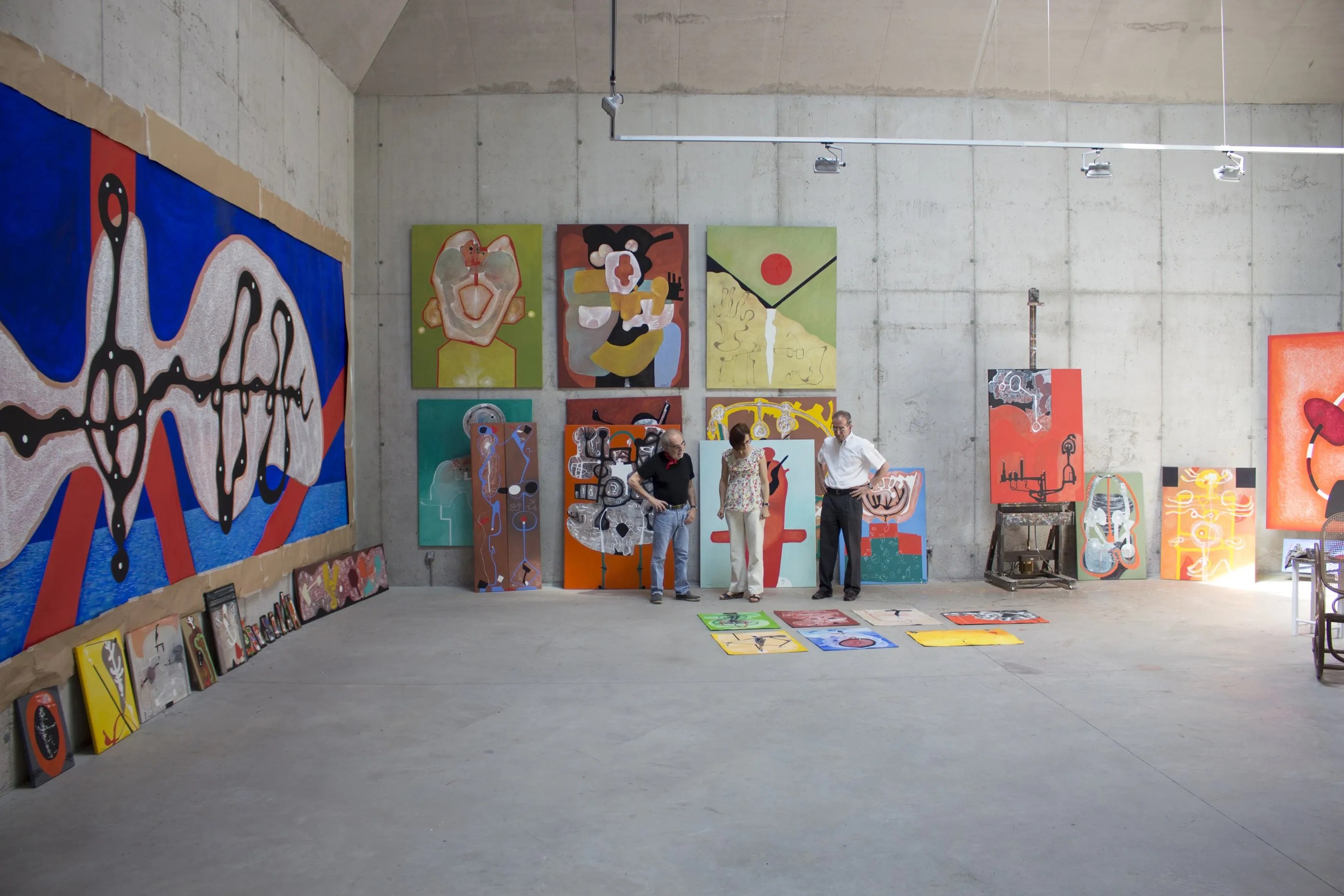
Small works laid out on the floor so they can be compared.
He died here on 20 October 2023, aged 82.
See the work made in this studio · The life told through the studios
Photographs by Eduard Arranz-Bravo’s team, between 2014 and 2020. The open day, by Antonio Navarro Wijkmark.